The Ideal Worker Fantasy: Failing at Work? Or is Work Failing You?
/(Prefer a video version? Check it out here - 4.5mins)
Ever feel like no matter how many hoops you jump through, it's never enough?
It may not be you.
In his book 'Sedated', James Davies talks about how, since the 1980s, big business has promoted the concept of the Ideal Worker and its character attributes:
Resilient
Optimistic
Individualistic
Economically Productive, and (albeit subtly inferred),
Compliant
Sounds pretty good, right? Well, sort of.
In principle, who wouldn't love to be that way week-in-and-out? It's a pretty tall ask though. Because humans are changeable. Mood, energy, motivation - all can be affected by sleep, relationships, workload, and even the weather. To be optimistic, resilient, and productive all the time, without complaint, regardless of context - is a bit of a pipe dream.
But the ideal itself isn't even the biggest issue.
The real problem, according to Davies, is that modern Western culture - Neoliberal, Free-market Capitalism - has framed any deficiency in the Ideal Worker standard as a personal failing. And more than that - medicalised the framing as 'mental illness'.
If you're struggling to keep up, and keep it all together, the message is simple: it isn't the workload, the role, or the organisation - it's because you're mentally unwell. "But fear not! Your GP has pills for you, and there are programmes to help you shift your mindset! You can be back at work in a jiffy - and with a smile!"
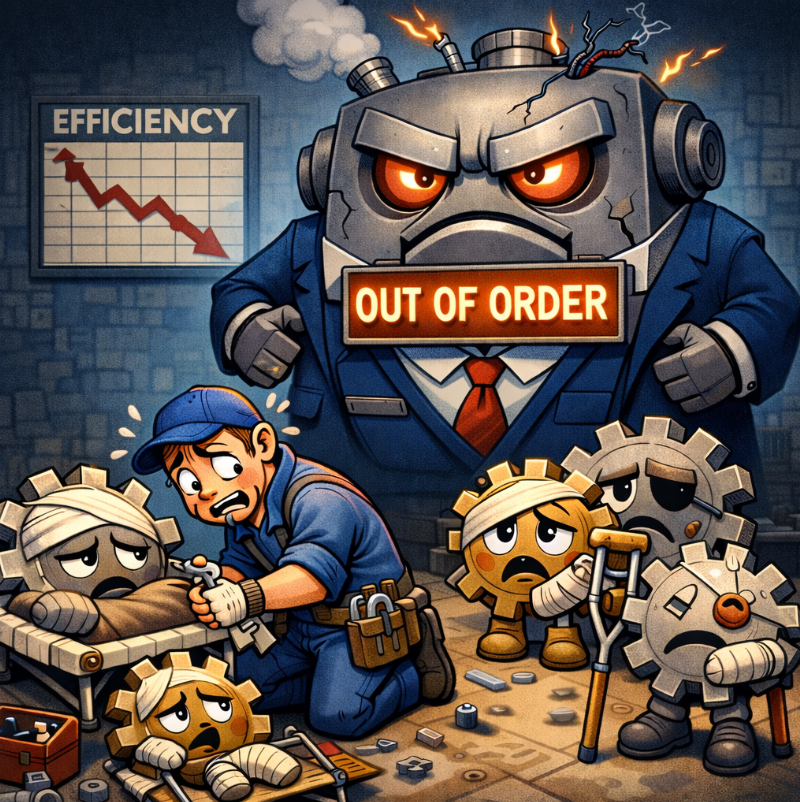
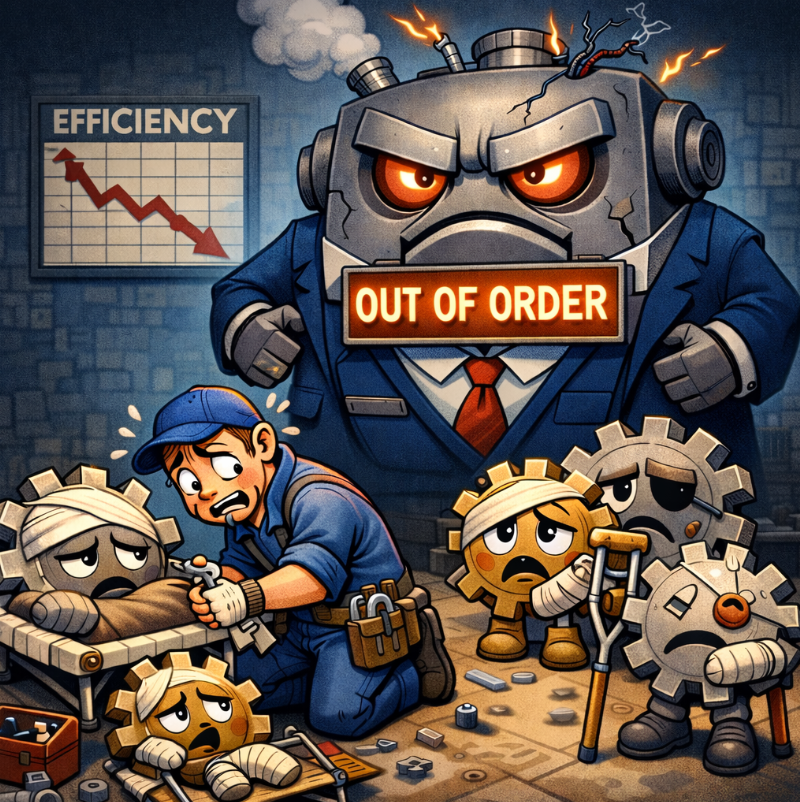
The problem isn't the drugs or therapy, per se - but how they're seen: a way to 'fix' the broken cog so the machine gets back up and running ASAP.
I worked for the same company for years and loved it. I loved the people, the culture, and my role. Until it became corporate, and I was 'promoted' to a job I didn't like. My mental health took a nose-dive. I thought the problem was me. And in some ways it was (after all, I chose to stay). But the environment changed - hence my relationship to the job did too.
Since then, I've worked hard to improve my mental health. And, in the last ten years, I've unknowingly aspired to meet the Ideal Capitalist Worker profile. Becoming more resilient, optimistic, individualistic, and productive. I think I've done fairly well. But that's only part of it.
In learning those skills, I've had to learn others too:
Boundaries - saying 'no' when it matters, not just yessing to avoid discomfort.
Agency - doing things in the way that's aligned with my values, not just from the script.
Accountability - owning what's mine, but also giving back what isn't.
Discernment - choosing where and how to focus my attention, loyalty, and emotional bandwidth.
Collectivism - considering others who might be affected as part of any decision.
Now, at first glance, these sound like great additions, don't they? But they're a double edged sword. Because…
Boundaries mean challenging bosses and colleagues at times.
Agency means sometimes getting creative at the expense of by-the-book rules to get the right outcome.
Accountability means not 'rescuing', through apology, someone who won't take responsibility themselves.
Discernment means stopping at 80% because any more would cost your wellbeing.
Collectivism means getting vocal about policies that make things worse for those they're supposed to be helping.
And - to me - none of that seems like the kind of behaviour a good, compliant Ideal Worker should be undertaking.
Which leads to my final question:
Does the Ideal Capitalistic Worker - who isn't just resilient, optimistic, individualistic, and productive, but also compliant and ever-loyal to the cause - actually exist? I'm not sure it does.
Rather than continually looking to fix the 'broken' cogs, maybe we should be looking at why the machine keeps breaking them in the first place.
Where are you failing to both meet, and question, the status quo?
Looking for help with unrealistic standards, misaligned expectations, or self-blame? Get in touch.