The MYTH of Mental Illness: Was Thomas Szasz Right?
/(Prefer a video version? Check it out here - 2.5mins)
Is mental illness real?
No - at least, not in the way we think.
Because according to psychiatrist Thomas Szasz, the problem lies in the question.
Thomas Szasz' 1960 book 'The Myth of Mental Illness' was both groundbreaking and divisive. He was branded both a heretic and a hero.
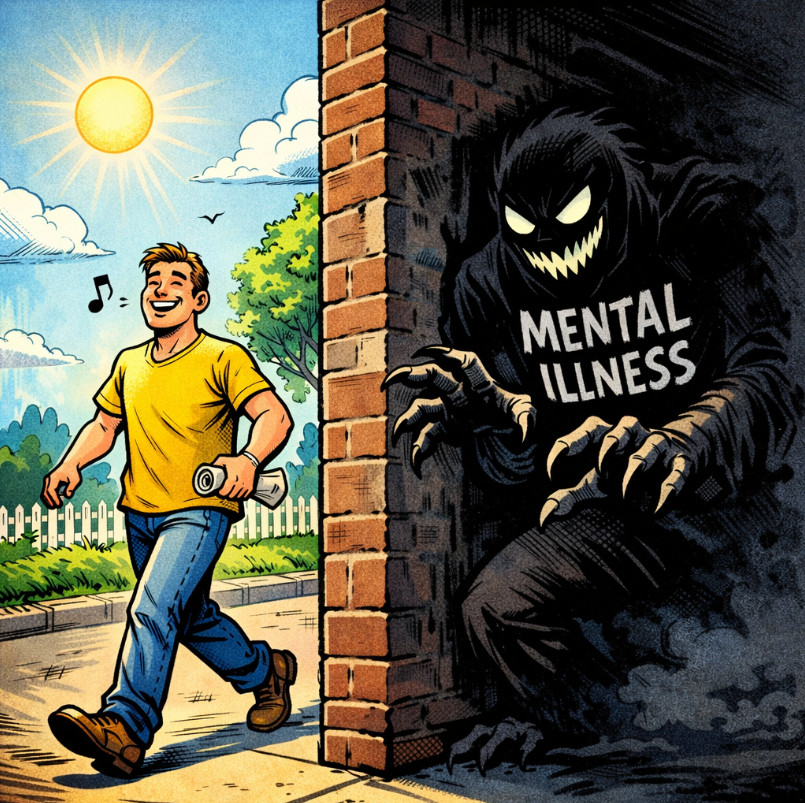
Szasz argued mental illness is best understood as meaningful communication, not disease. He described it as a social interplay of roles, where the 'sick person' can express and manage their distress in socially acceptable ways. And the clinician becomes the 'expert', with power to define what counts as illness and what the treatment should be. Szasz never said people don't suffer. They do. But that there's more to it than mental 'sickness'.
According to Szasz, the notion of mental illness, in its current conceptual form, originates from the 1800s. And it created a paradigm shift. Where before, illness required visible symptoms - like a tumour or infection - mental illness didn't. A person's condition could be diagnosed based solely on behaviour and interpretation, not observable pathology. Szasz said this opens the door for coercion and moral judgement.
Szasz' proponents agree he highlights the social and power dynamics often otherwise overlooked. And praise his vision of 'ethical psychiatry', insisting on agency for the person in distress. Whereas his critics argue the mind-body connection is too complex for an either/or stance on mental illness, and that traditional treatment through medication and therapy can indeed be beneficial.
The Myth of Mental Illness was written before MRIs existed, and over half-a-century of research has been done since. And modern thought suggests mental health is the product of something called the Biopsychosocial model - an interaction between a person’s biology, psychology, and social environment. But Szasz' perspective is still important, especially in understanding the medicalisation of mental health, and human experience overall.
This isn’t about denying mental suffering. It’s about questioning how we define it, who gets to decide, and at what the implications are.
I explore these ideas in more depth in a 15-minute talk I gave recently - looking at what Szasz got right, where he overstepped, and why he's still relevant to mental health today.
Click here to watch the video (15mins).
Struggling to make sense of your mental health? Book a session with me.